
Dubrovnik is crowded mainly between about 10 a.m. and 4 p.m. on days when large cruise ships are in port, especially in July and August. You can avoid most of it by checking the cruise ship schedule, visiting the Old Town early in the morning or in the evening, walking the City Walls at opening, staying outside the Old Town, and traveling in shoulder season.
Ask anyone who has squeezed through Pile Gate at 11 a.m. on a July morning, and they’ll tell you: the “Pearl of the Adriatic” can feel more like a theme park queue than a fairytale. But most of the crush comes from cruise ship passengers arriving in waves, and waves are predictable.
In this guide, we’ll show you why Dubrovnik gets so busy, when to visit, how to read the cruise schedule like a local, and where to escape when the Old Town is bursting at the seams.
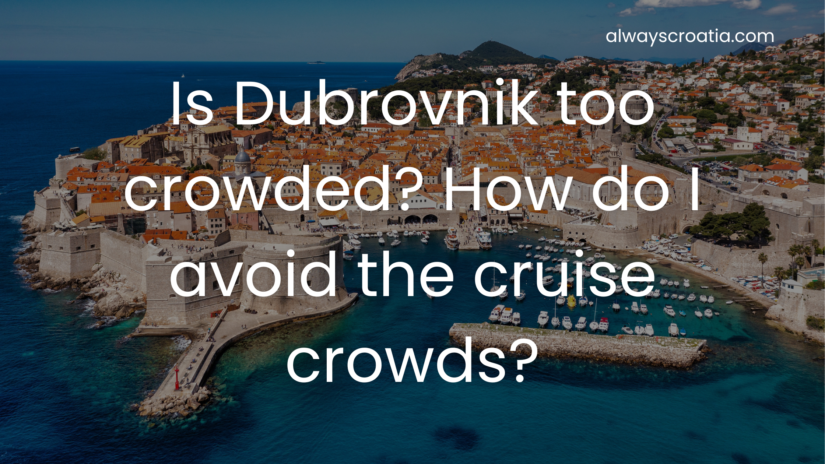
Dubrovnik’s Old Town is tiny. The main street, Stradun, is only about 292 meters long, and the whole walled city could fit inside a large shopping mall. Now pour in summer hotel guests, day-trippers from Montenegro and Split, tour buses, and a couple of massive cruise ships, and you’ve got a recipe for gridlock.
Then there’s the Game of Thrones effect. Once King’s Landing became a global phenomenon, Dubrovnik went from “lovely Adriatic city” to bucket-list icon practically overnight. Fans still line up on the Jesuit Stairs to recreate the famous “walk of shame,” and the selfie sticks never really left.
The good news? The city has been fighting back. Under its “Respect the City” program, Dubrovnik limited cruise ships to two per day, asked ships to stay longer (around eight hours) so passengers spread out instead of rushing in at once, cut the number of souvenir stalls, and introduced pre-booked slots for tour buses arriving at Pile Gate. The goal is to keep around 4,000 cruise visitors in town at any one time, a far cry from the peak days of the mid-2010s, when cruise passengers alone could top 10,000.
It’s not a perfect system, but it means the crowds are more predictable than ever. And predictable crowds are crowds you can avoid.
If you’re flexible with your travel dates, this is your single biggest lever. Here’s how the year breaks down:
This is Dubrovnik at full volume. Expect multiple cruise ships on most days, packed beaches, the highest hotel prices, and temperatures that make the City Walls feel like a frying pan. If summer is your only option, don’t panic. The tips below will still make a huge difference.
This is the sweet spot, and our favorite time to be in southern Dalmatia. The sea is warm enough for swimming from June through early October, restaurants are fully open, and the light is glorious. One thing to know: cruise traffic doesn’t disappear in the shoulder months. Late spring and September can still see busy cruise days, so checking the ship schedule matters just as much now.
You’ll have Stradun almost to yourself, especially in January and February when cruise ships practically vanish. Some restaurants and hotels close, and it’s not beach weather, but if you want that quiet, misty, “we have the city to ourselves” feeling, winter Dubrovnik is magical. December also brings the Dubrovnik Winter Festival with Christmas markets and lights along Stradun.
Here’s the secret most first-timers miss: Dubrovnik’s crowds aren’t constant. They come in a wave that rolls in mid-morning and rolls back out late afternoon. Learn to work around it, and you’ll see a completely different city.
Cruise ships dock at Gruž Port, about 3 km from the Old Town, and passengers are shuttled in by bus. Before you lock in your plans, look up the Dubrovnik cruise ship schedule on a site like Cruise Timetables or Cruise Mapper. Check two or three weeks before your trip, since schedules shift.
You’re looking for two things: how many ships are in, and how big they are. A small expedition ship with 200 guests barely registers. Two mega-ships carrying 4,000+ passengers each will change your whole day. Plan your Old Town visit, especially the City Walls, for the lighter days, and save beaches or day trips for the heavy ones.
On a typical cruise day, passengers start arriving in the Old Town around 9 a.m., the streets are at their fullest from roughly 10 a.m. to 3 p.m., and most people head back to their ships by 4 or 5 p.m. So flip your schedule:
The Dubrovnik City Walls are the must-do, and they’re also where crowds hurt the most. The 2 km loop has almost no shade, and on heavy cruise days the line at Pile Gate can stretch to 45 minutes or more around midday.
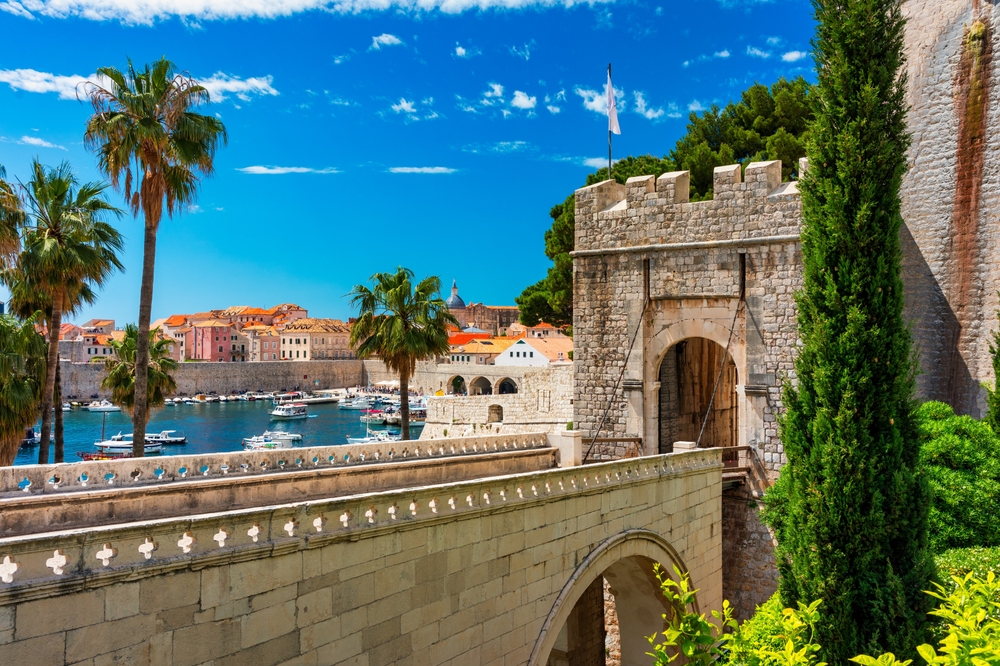
Go right at opening (8 a.m. in summer), and start from the Ploče Gate or St. John’s Fortress entrance instead of Pile Gate. The walls run one way (counter-clockwise), so an early start puts you an hour ahead of the herd for the entire loop. Your other option is the last couple of hours before closing, when the sun sits low and paints the rooftops orange.
The Dubrovnik Pass includes the City Walls, Fort Lovrijenac, the Rector’s Palace, and several museums, plus unlimited rides on local buses. At the time of writing, a one-day pass costs about €40, roughly the same as a walls ticket on its own. Free buses mean you can stay outside the Old Town and pop in at the quiet hours without paying for taxis.
It sounds backwards, but staying in Lapad, Babin Kuk, or Ploče gives you the best of both worlds. You’ll have a beach on your doorstep, calmer evenings, and quick access to the Old Town for those golden early-morning and late-evening visits.
Stradun, Pile Gate, and the Jesuit Stairs are the busiest spots. Duck into the side streets instead. The steep lanes climbing north toward Prijeko and the quieter corners around the Dominican Monastery and the Old Port often feel half-empty even at noon. And yes, take that Game of Thrones photo, just do it at 7:30 a.m.
Some of the best things to do in Dubrovnik aren’t inside the walls at all.
Just a 15-minute boat ride from the Old Port, Lokrum is a green, car-free island with botanical gardens, roaming peacocks, a Benedictine monastery, and rocky swimming spots. Take the first boat out in the morning and you’ll be swimming in the “Dead Sea” saltwater lake while the cruise crowds are just arriving on Stradun.
Ride the cable car (or hike the zigzag path) to the top of Mount Srđ for the classic aerial view of the Old Town and the Elaphiti Islands. Go late afternoon and stay for sunset.
About 20 km south, Cavtat is everything people love about Dubrovnik on a smaller, slower scale: a palm-lined harbor, stone houses, and seafront paths for a sunset swim. It’s easy to reach by boat or bus.
Koločep, Lopud, and Šipan sit just off the coast and feel worlds away. Lopud’s sandy Šunj Beach is a favorite, and there are no cars to dodge. Spending a day island hopping is one of the smartest ways to dodge a heavy cruise day.
An hour’s drive northwest, Ston has its own medieval walls (some of the longest in Europe) and the freshest oysters you’ll ever taste, straight from Mali Ston Bay. Pair it with a tasting at a Pelješac winery, home of Croatia’s famous Plavac Mali red, and you’ve got a perfect crowd-free day.
Want to skip the big-ship crowds altogether? Exploring the Dalmatian coast on a small ship cruise is our favorite way to see Dubrovnik and the islands. Smaller boats dock in places big ships can’t reach and arrive at hours the crowds don’t, so you get the beauty without the bottlenecks.
In July and August, the Old Town can feel very crowded between 10 a.m. and 4 p.m., especially on days with large cruise ships in port. Visit early in the morning or in the evening, and spend midday at the beach or on an island, and summer becomes much more enjoyable.
Most cruise passengers head back to Gruž Port between 4 and 5 p.m. Evenings in the Old Town are noticeably calmer.
Under the city’s “Respect the City” rules, Dubrovnik aims for a maximum of two large cruise ships per day, with longer stays to spread out passenger arrivals.
For a balance of good weather and fewer people, aim for May or October. For the emptiest streets, January and February are the quietest months of the year.
You can see the highlights in a day, but two or three nights let you enjoy the Old Town at its quietest hours and add a day trip to Lokrum, Cavtat, or the Elaphiti Islands.
Absolutely. Dubrovnik is crowded at certain times, but it’s never crowded all the time. Check the cruise schedule, travel in the shoulder season if you can, walk the walls at opening, and spend the busy hours swimming off Lokrum or sipping wine on Pelješac. Do that, and you’ll find the version of Dubrovnik that made people fall in love with it in the first place.
Explore our Croatia small ship cruises and private tours, and let our local team plan a Dubrovnik trip that works around the crowds, not through them.

Written by Sarah Diaz · November 25, 2026
Sarah Diaz is a Destination Specialist at Always Croatia with over 15 years of hospitality experience. She loves Croatia for its history, natural beauty and the sea, and takes great pride in introducing travelers to this amazing part of the world.



 7 Nights

